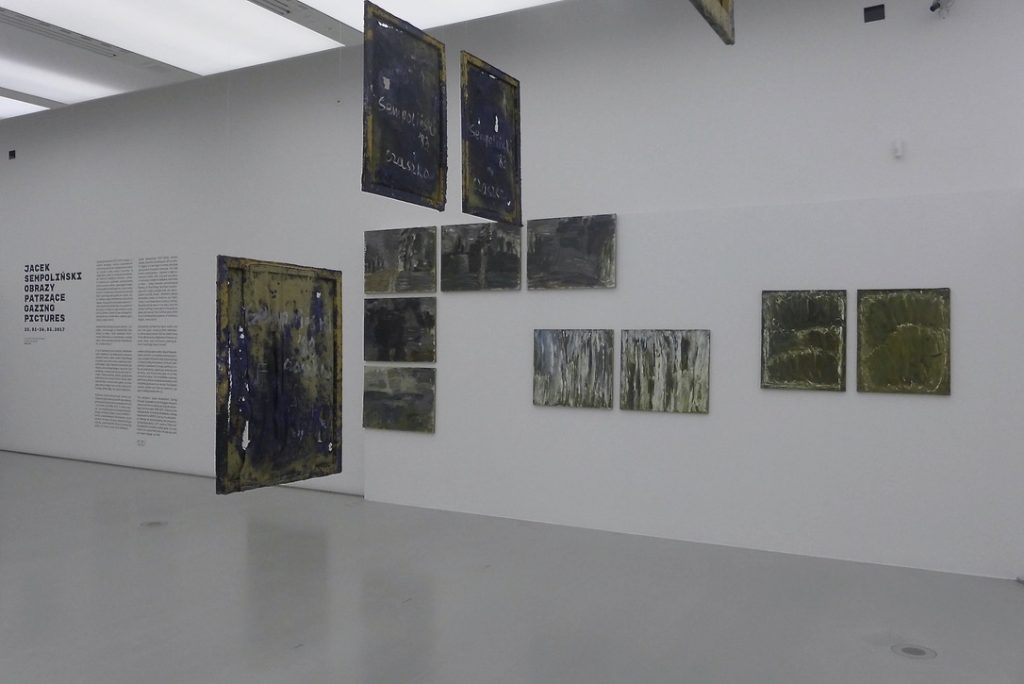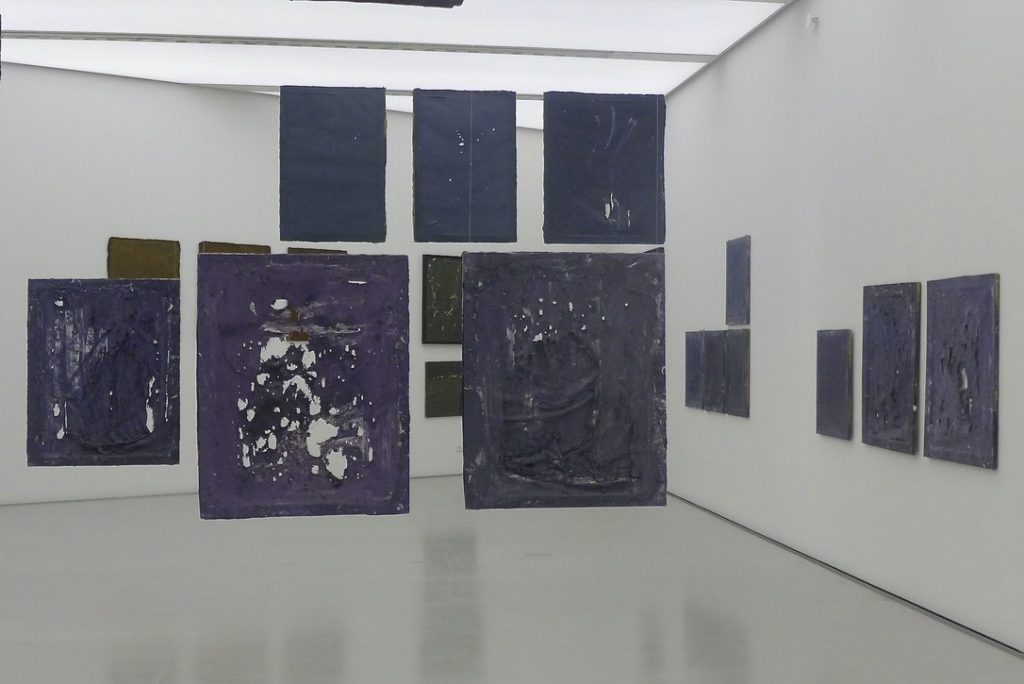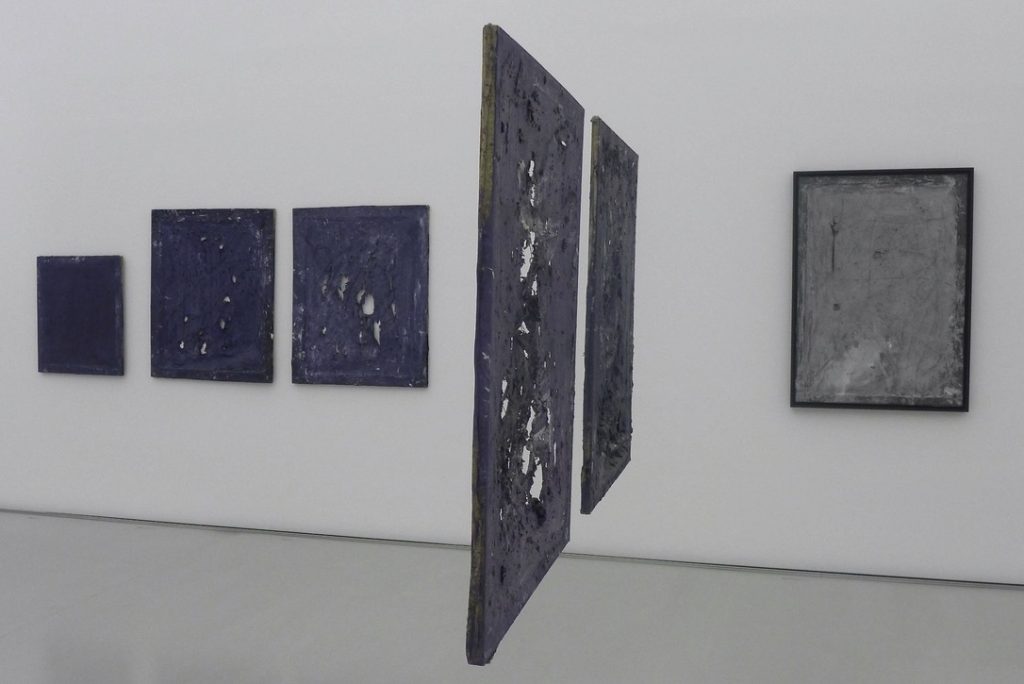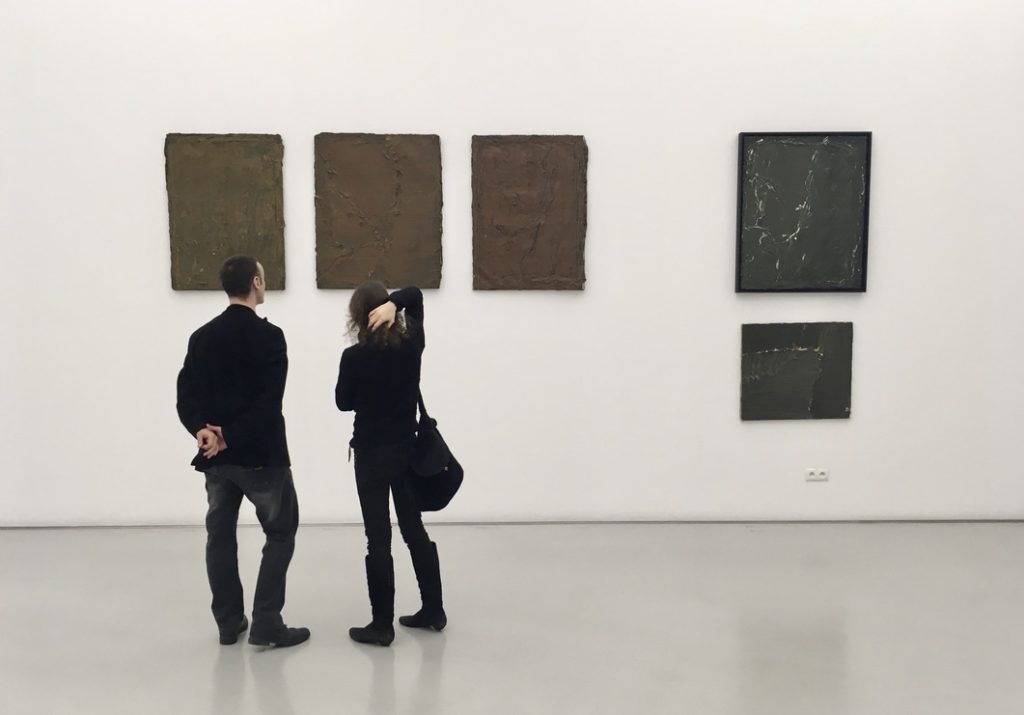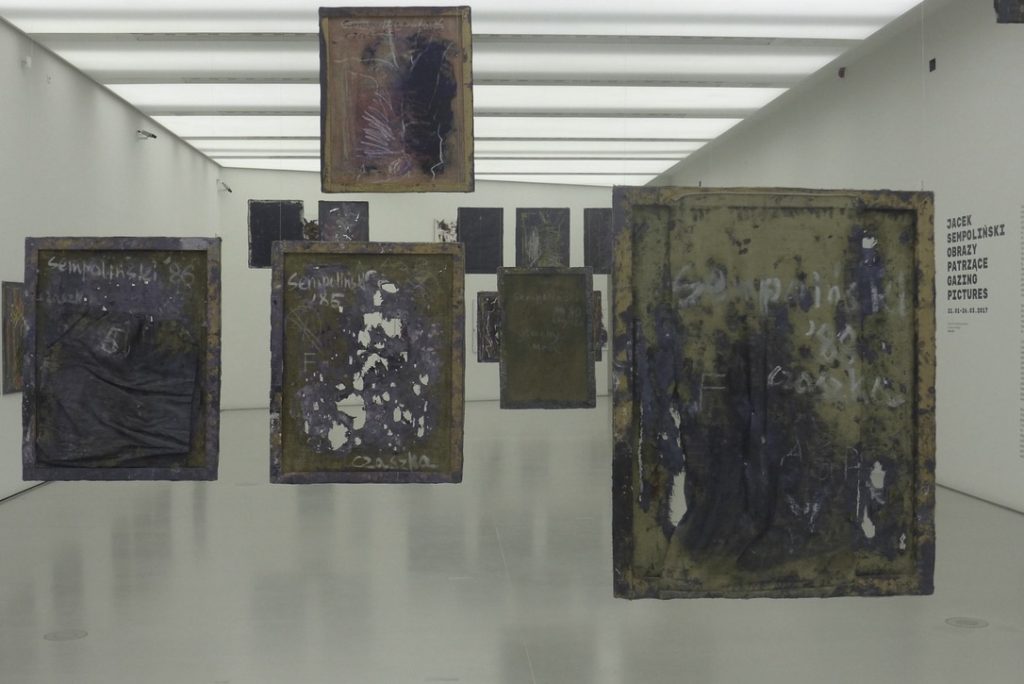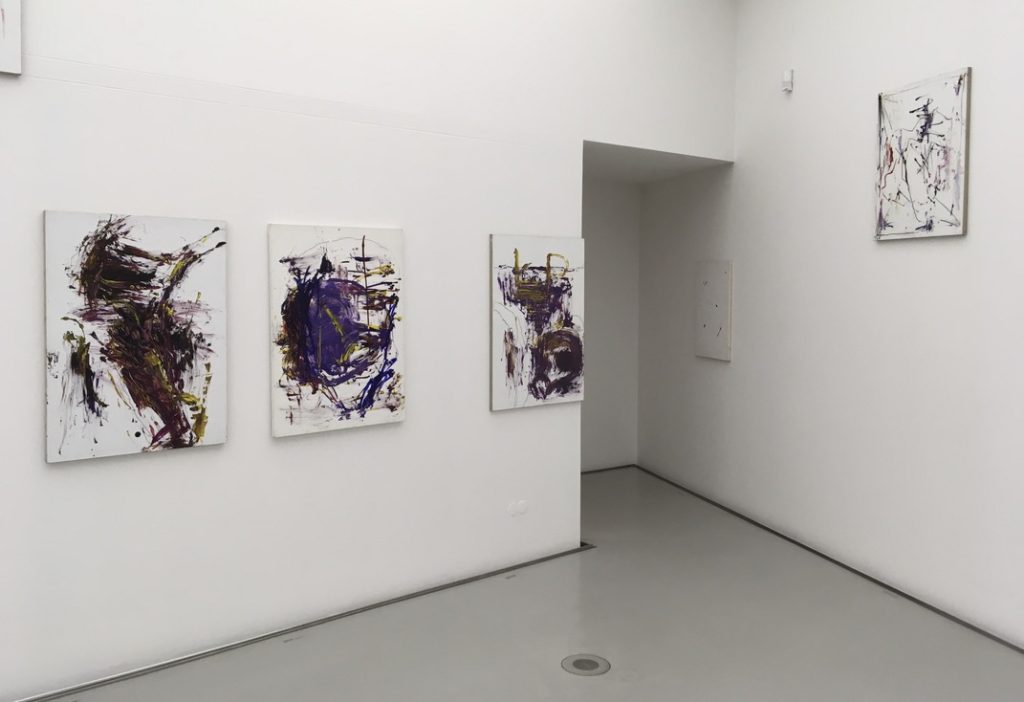
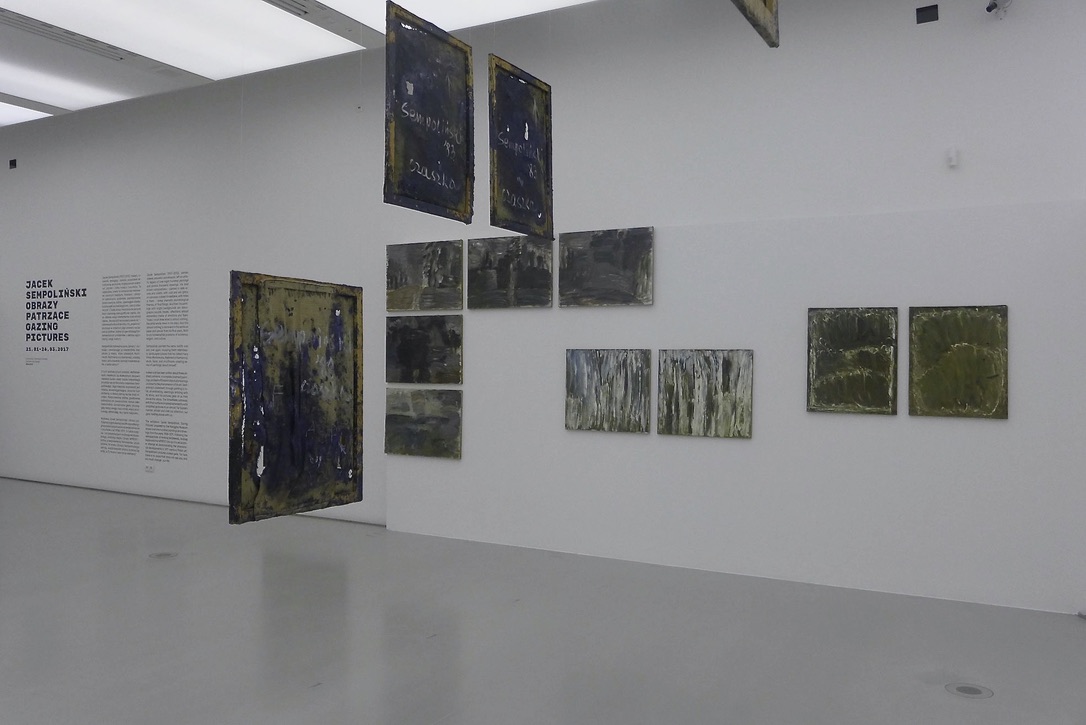
Jacek Sempoliński left an artistic legacy of over eight hundred paintings and several thousand drawings. His best known compositions – painted in dark azures and violets, with cold and ash greys, on canvases rubbed threadbare, with holes in them – reveal dramatic eschatological themes, of ‘final things’. And then his paintings with bright backgrounds are stenographic records, traces, reflections, almost elementary marks of emotions and fears. ‘Today I must draw what is almost nothing,’ the artist wrote down in his diary. And this ‘almost nothing’ is dominant in the works on paper and canvas from his final years. Both touch fundamental problems of existence, religion, and culture.
Sempoliński painted the same motifs over and over again, studying them relentlessly: landscapes (places that he visited many times: Mochnaczka, Męćmierz or Kamianna), skulls, faces, and crucifixions, creating series of paintings ‘about himself’. As noted by Jacek Waltoś, ‘he probably understood creative endeavour as it is fixed on his canvases and papers: as my own, one and only, unique existence.’
Indeed a lot has been written about these abstract, extreme, incomplete (maimed) paintings, and each of these interpretations brings us closer to the phenomenon of his art. Sempoliński’s statement through painting is total, all-embracing, seemingly enticing with its abyss, and his pictures gaze at us from above this abyss. The threadbare canvases, with their surfaces brushed vehemently with simplified gestures in an almost Far Eastern manner, attract and rivet our attention, our gaze, trading places with us.
The exhibition ‘Jacek Sempoliński. Gazing Pictures’ prepared by the Manggha Museum shows over one hundred paintings and drawings from the years 1958–2011. Following the retrospectives of Andrzej Wróblewski, Andrzej Wajda and the WPROST Group, it is yet another attempt at demonstrating the phenomenal developments in 20th-century Polish art. Sempoliński’s pictures indeed gaze, ‘for here there is no place that does not see you, and you must change your life’.
Photo report from the exhibition