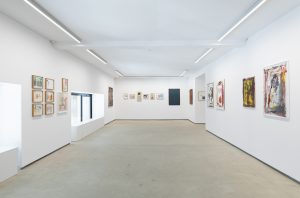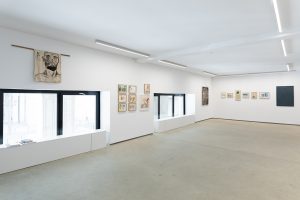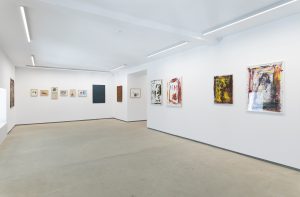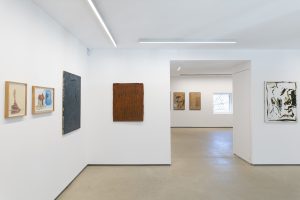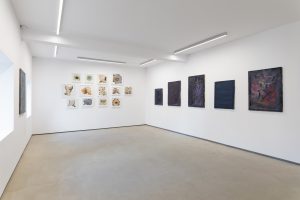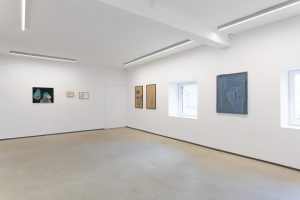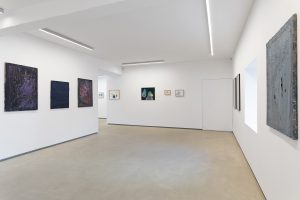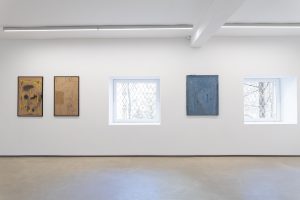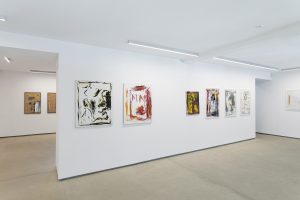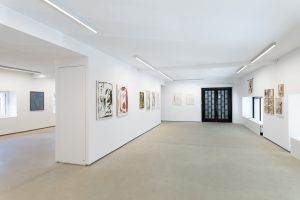
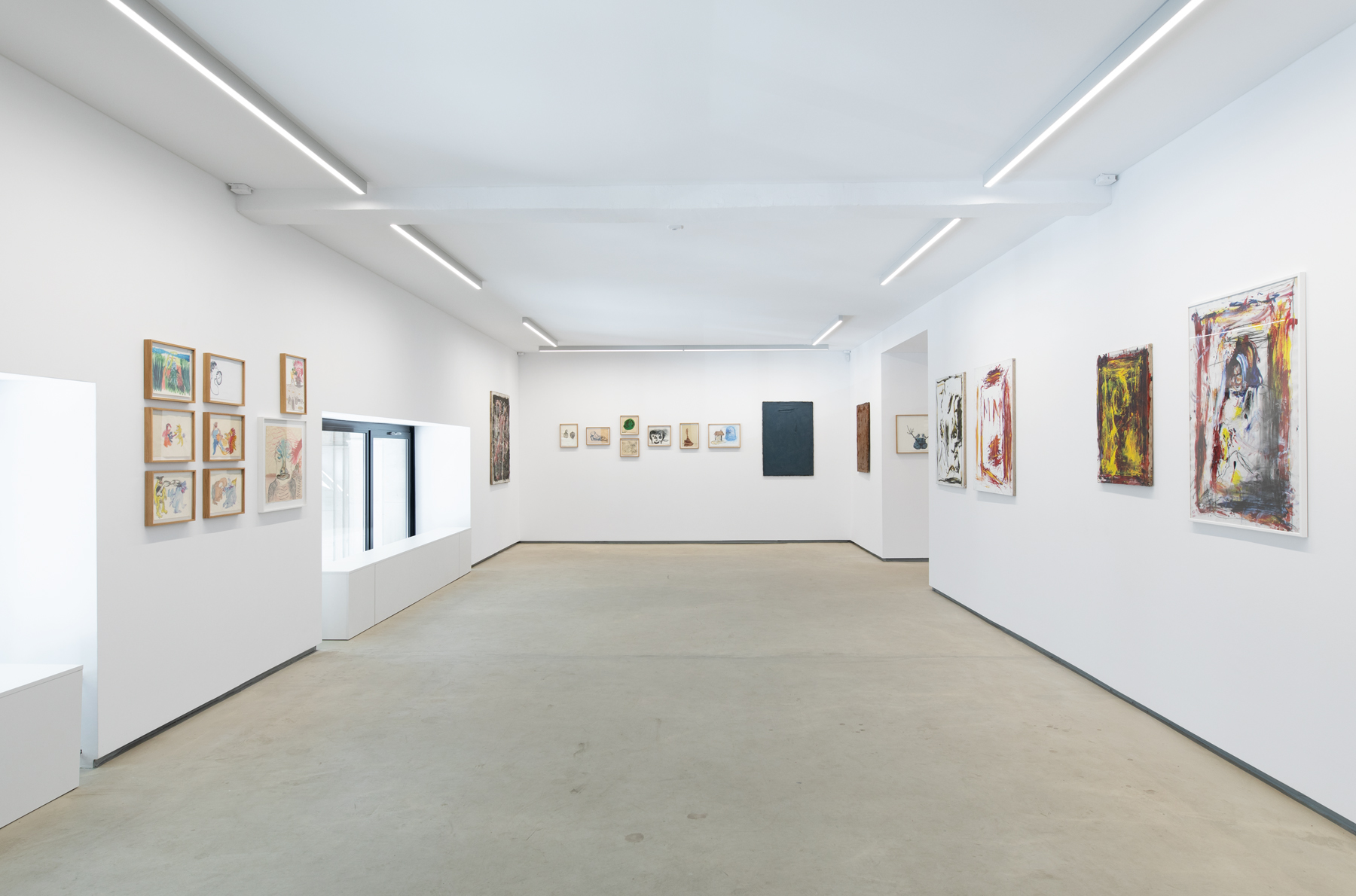
Jacek Sempoliński’s absolutely consistent mode of artistic expression markedly differs from the infinitely varied creative activities of Magdalena Starska. What they have in common, however, is their striking link between life and art. Sempoliński’s images are deeply embedded in eschatology and religion, but one deeply spiritual, intimate and far from catechism. It materialises, among others, in the drawings of saints, who are often depicted in a dramatic way, but simultaneously as people living in our times. The painted pictures, on the other hand, are characterised by a simplified painting gesture and a monochromatic palette. Sometimes this meditative gesture leads to the destruction of the canvas. The pieces of Magdalena Starska are more diversified. The beholder can even get the impression that her works are created by somebody who, upon the completion of one drawing, forgets the way in which it was done and begins everything anew. If you see more of them, you can quickly notice regularities, repetitive threads, and motifs — cocoons, hatching, pupating, and jostling creatures. Although there are no Christian saints, spiritual motifs, closer maybe to paganism, are perceptible in the form of incessant revival, vitality, and movement. Hers is a free and intuitive creativity. Some drawings seem to lack composition, being placed on the edge of a sheet of paper or a painting. In this respect, they totally differ from Sempoliński’s compositions, which, even though dynamic and open, are still classical.
The art of Sempoliński and Starska focuses on an incessant, concentrated effort to get to the essence. Sempoliński frequently wrote about an abyss, while Starska mentions movement and the necessity to permanently participate in it. Both of the artists transgress the monotony of everyday life and, despite their work’s being woven in reality, it is far from triviality. Starska elevates seemingly prosaic phenomena and events to the status of a mystery, whereas every day Sempoliński equally carefully and intensively experiences the most basic aspects of human existence.
Photo report from the exhibition